Packaging the Future

Packaging protects products, conveys brand messaging and ensures efficient logistics. In future, it will also need to be able to do something else much more consistently: It will need to be part of a functioning circular economy. The European Packaging and Packaging Waste Regulation (PPWR) is not just changing the way packaging is regulated. The way in which companies (need to) think about packaging is changing too.

Reuse targets
from 1.1.2030
100 % reuse for transport between sites belonging to the same company and affiliated companies
40 % of transport packaging
needs to be reusable
100 % reuse of packaging used in domestic transport
Europe has set itself an ambitious target: In the future, packaging should not only protect products, but also become an integral part of a sustainable circular economy. With the new Packaging and Packaging Waste Regulation (PPWR), the European Union has created a uniform legal framework for packaging in all 27 member states for the first time. The regulation has been in force since 2025, but many of its requirements are only set to come into effect gradually over the coming years. For companies, this heralds the start of a transformation whose impact will extend way beyond new documentation obligations.
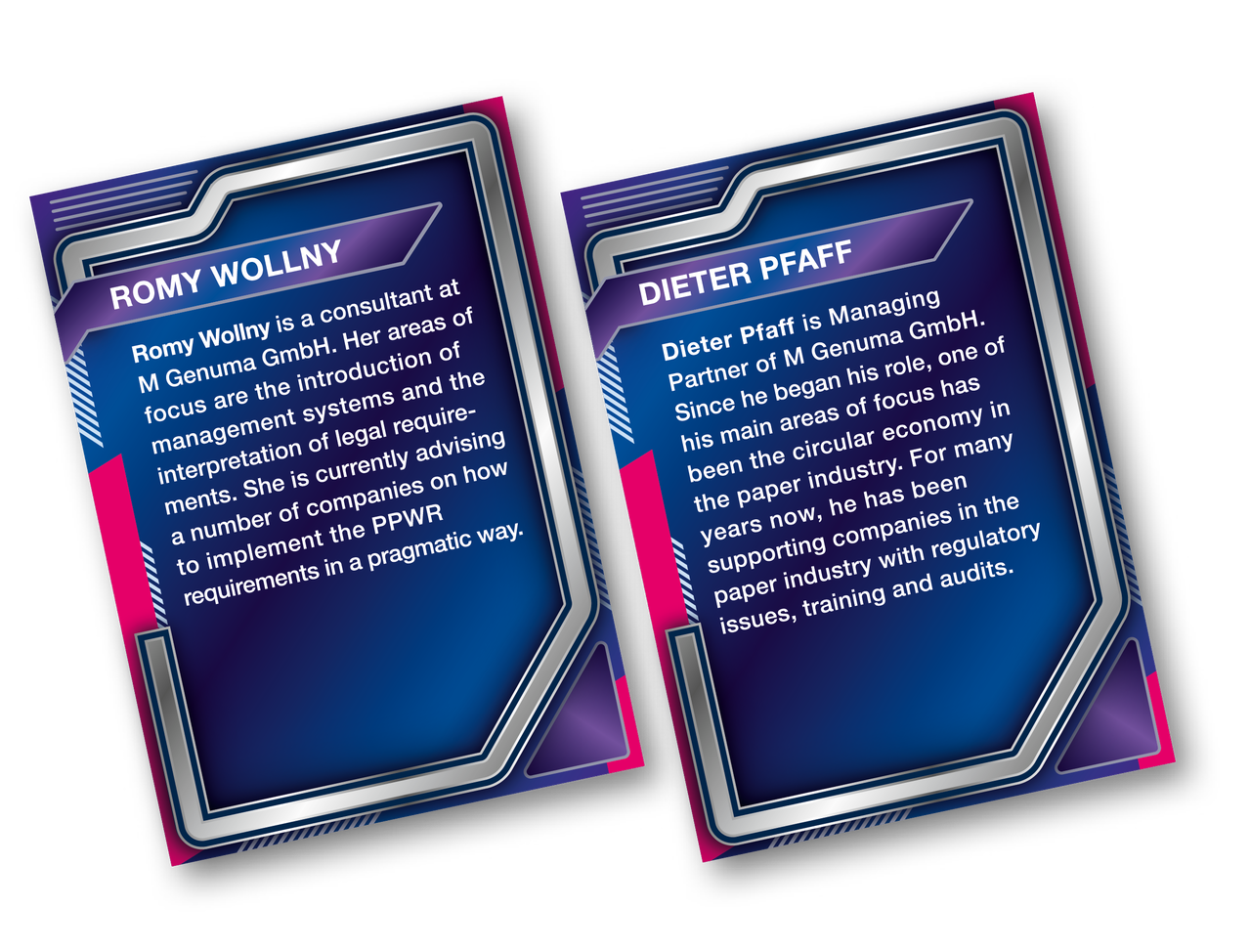
Anyone who currently engages with manufacturers, brand owners, packaging producers or retailers is experiencing an industry in transition. Companies are analysing their obligations, reviewing supply chains, gathering data and trying to understand which specific requirements will apply in the future. The focus is very much on deadlines, providing evidence, declarations of conformity and reporting obligations. This is understandable because the PPWR involves a large number of new requirements and lots of detailed rules will only be specified in detail by legal acts that are yet to be implemented. “Many companies are currently focusing primarily on the immediate requirements and the questions of legal compliance,” observes Romy Wollny, consultant at M Genuma GmbH. “This is understandable because a number of specific aspects still need to be confirmed. At the same time, there’s a risk that the strategic aspect of the regulation will take a back seat.” Yet this is precisely what the PPWR is really about. Unlike many regulatory adjustments that have been seen in recent years, this regulation does not just amend processes. It establishes basic criteria that must be used for developing, assessing and using packaging.
“Packaging no longer ends on the shelf or with the consumer. It’s becoming part of a system.”
Dieter Pfaff
Paradigm shift
In the future, recyclability will also be a major factor. “This will no longer be something that is just nice to have,” says Dieter Pfaff, Managing Partner of M Genuma GmbH. “It is demanded by the PPWR and is therefore now an established criterion for deciding on packaging solutions.” The objective of the regulation is to significantly reduce packaging waste in Europe and make material cycles more robust. Packaging needs to be as recyclable as possible, use resources efficiently and be capable of being returned to the economic cycle once it’s been used.” At the same time, unnecessary packaging should be avoided and the amount of material used should be reduced. The public discourse about the PPWR often reduces it down to the question of which material will have the upper hand in the future. Paper or plastic? Fibre or film?
However, the view of experts is that this discussion misses the point. “Sustainability can’t just be defined by the material alone,” explains Pfaff. “It’s crucial to look at the system as a whole.” How much packaging is actually needed? Which materials are combined with one another? Can the packaging be sorted and recycled? Are there functioning collection and recycling systems to facilitate this? And is a cycle actually produced in the end? The regulation does not just demand theoretical recyclability. What matters in the long term is whether packaging can actually be collected, sorted and recycled in the systems that exist. This means there is more focus than ever on the practical feasibility of the system. “In this case, sustainability does not just mean switching over to a different material,” adds Dieter Pfaff. “It’s crucial to look at the system as a whole.”
What is changing:
Uniform rules governing packaging in all EU member states
Higher requirements placed on recyclability and recirculation capacity
Specifications for reducing the amount of packaging material and empty space
Minimum quantities of recycled materials for certain plastic packaging
Extended responsibility for the manufacturer along the entire value chain
Extensive documentation and verification obligations
What this means for companies:
In the future, thought needs to be given to making packaging recyclable from the outset
The choice of material, design of the packaging and its recyclability will become strategic factors that make packaging competitive
Cooperation between brand owners, packaging manufacturers and the recycling industry is set to become much more important
Design as a strategic task
This change is demonstrated particularly clearly in the design of packaging. Up until now, lots of packaging has been developed primarily by considering technical, logistical or marketing aspects. In the future, developers will also need to consider the impact their solutions have on recycling processes. Combinations of materials, coatings, adhesives or composite structures will be subjected to greater scrutiny if they compromise the recyclability of a packaging product. This means that the principle of “design for recycling” is set to become much more important. “In the future, packaging development will need to examine to a much greater extent whether the choice of material and design are compatible with the requirements of the PPWR in the long term,” says Wollny. The packaging of the future will therefore be developed not just with production plants and retail shelves in mind. It also needs to fit into and work in sorting plants, recycling processes and material cycles.
Another key component of the PPWR is avoiding packaging waste. The regulation calls for packaging to be reduced to the level that is actually necessary. This means there will be increasing pressure to avoid empty space, unnecessary amounts of material or oversized packaging solutions. This will also primarily have an impact on companies’ economic considerations. Less material means fewer resources being consumed, lower transport weights and in the long term potentially lower costs within the waste disposal and take-back systems of the future. This will present new opportunities for packaging solutions that use materials efficiently. Solutions like the Next Generation Products from Progroup follow precisely this approach: reducing the use of materials and at the same time meeting the highest requirements for stability, performance and technical specifications. “The less material can be used with comparable properties, the better the conditions will often be when you consider the future requirements of the PPWR,” explains Wollny.
Recycling as a competitive factor
In addition to recyclability, there is also increasing focus on making use of recycled materials. For plastic packaging in particular, the regulation makes provision for binding minimum quantities of recycled material in the future. This will significantly increase the demand for high-quality post-consumer recycled materials. This also raises the question of whether sufficient quantities of these materials will actually be available. There is already a great deal of discussion in the industry today about whether it will be possible to provide the necessary quantities of recycled plastic materials to meet the envisaged quotas. The availability of suitable secondary raw materials could thus develop into a crucial competitive factor. This presents additional opportunities for fibre-based packaging. Paper-based solutions already have established collection and recycling structures and can be returned to existing material cycles relatively easily. However, here too the starting points in the EU member states are very different. Whereas some countries already have highly efficient collection, sorting and recycling systems, others are still very much at the early stage of developing this infrastructure. At the same time, there are significant differences in packaging habits, the use of materials and infrastructures. “The regulation creates a joint framework,” says Wollny. “But whether the targets can be achieved within the envisaged time frames will also depend on how quickly the necessary infrastructure is established and developed.” Then there is also another challenge: A number of delegated legislative acts that are intended to specify key requirements are still pending. This means that many companies are having to make decisions today even though key details have not yet been finalised.
The key milestones 2026–2040
New sustainability requirements for packaging
Binding targets for recycling and reuse
Higher recycling rates and enhanced circular economy
70% reuse and higher recycled material fractions
Initiating change
The regulation enhances the responsibility of the people who design packaging and place it on the market. At the same time, the demand for information about materials, ingredients, recyclability and recirculation is growing. This means that brand owners, retailers, packaging manufacturers, material suppliers and recyclers all need to work together more closely than before. “In future, the ideal packaging will no longer be created in isolation,” says Pfaff. “It will be created by much closer engagement throughout the value chain.” Packaging will thus increasingly become a joint task. Many companies are still at the start of this process. The next few months and years will initially be defined by the process of implementing the new requirements. Compliance therefore remains a key topic. But any company that views the PPWR solely as a regulatory obligation will come up short. The regulation defines the rules of the game for the packaging world of tomorrow. It will change the way that packaging is developed. It will influence decisions about which materials are used. It will strengthen the circular economy and the efficient use of resources. And it will open up new opportunities for innovative solutions that use materials efficiently. Or as Romy Wollny puts it: “It won’t work without change.”