New logistics network
Each new production site that is added not only expands Progroup’s network, but also increase the level of logistics complexity. Every day, the company needs to coordinate the transportation of more than 1,500 consignments across Europe. The products being transported range from recovered paper and rolls of containerboard to corrugated board sheets for customers. To allow flows of goods to be managed even more efficiently, transparently and reliably in the future, Progroup is preparing for the next stage of development in its digital logistics.
1.500
daily transport services
24/7
Track & Trace
100%
capacity utilisation
Centralised
digital tracking
“We can only manage the full network optimally if we have complete oversight.”
Simone Vosseler
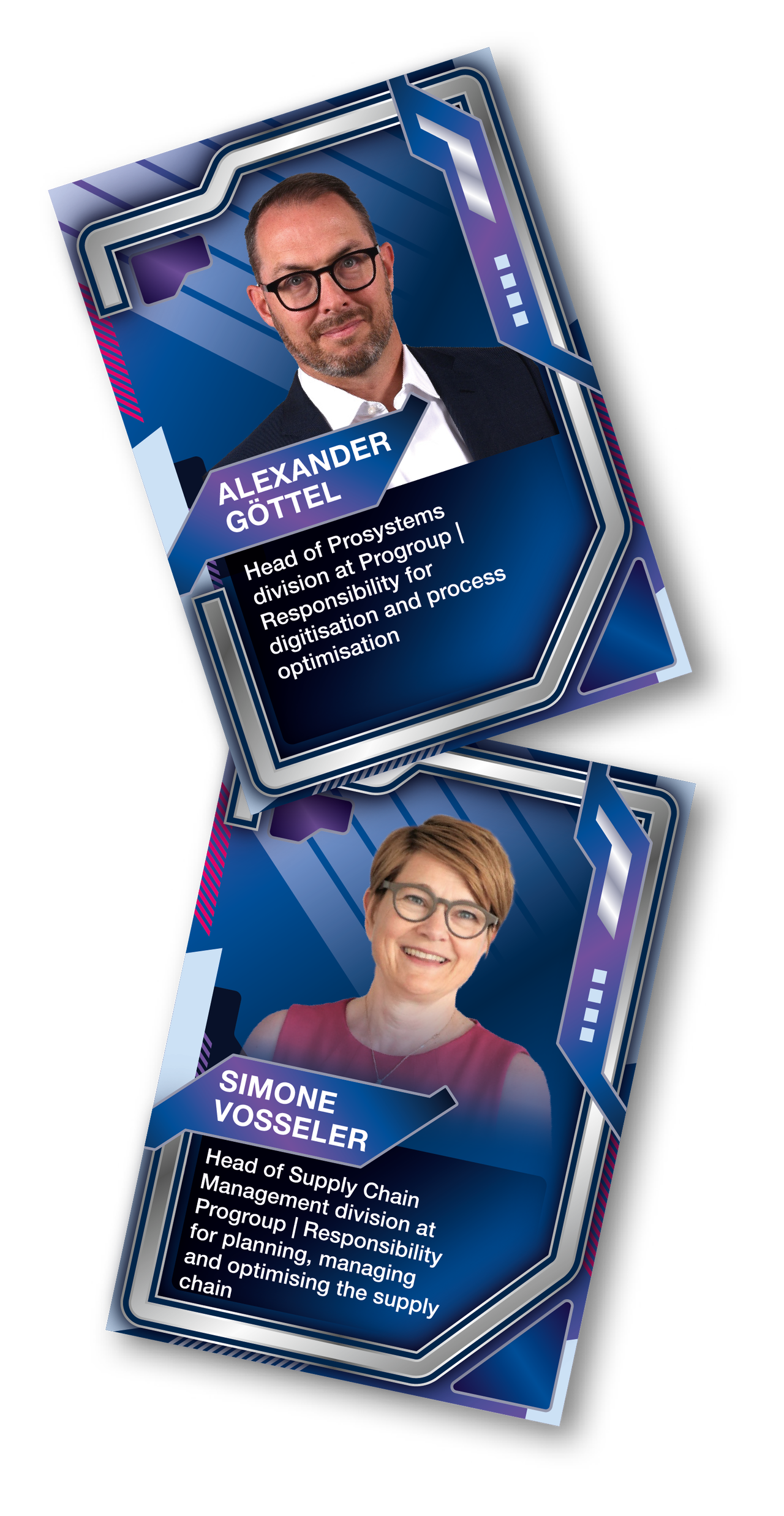
At its heart will be a new transport management system that will bring together all processes on a single platform in the future. “Reliability is the key promise we make to our customers,” says Simone Vosseler, head of the Supply Chain Management division. “To deliver on this promise, we need full transparency across all flows of goods. We can only manage the full network optimally if we have complete oversight.” Some elements of the transport chain are already supported digitally today. However, going forward the new system is set to bring together the entire transport network in one integrated solution. This is because in practice all flows of goods are closely interlinked. For example, a truck delivers paper to a corrugated board plant. Instead of returning empty, it then picks up corrugated board sheets for delivery to a customer. From there, it can then load recovered paper or pallets and transport them back to the paper factory or to a corrugated board plant. Linking together these kinds of transport chains in a smart way reduces the number of empty loads, improves capacity utilisation and also increases the level of flexibility throughout the network. “We currently still look at lots of flows of goods separately,” explains Vosseler. “In future, we want to plan and manage them in an integrated way. This is the only way to create real potential for optimisation.”
More transparency in the end-2-end flow of goods – from the raw material to the customer
Besides more efficient scheduling, the focus is primarily on creating transparency along the entire supply chain. The new transport management system is designed to make information about transport status, deviations or delays much more visible in the future. Although Track & Trace is already used today, many external carriers work with different technical standards. The new platform will combine this information, creating a consistent database for customers and suppliers. “We don’t just work with one single carrier, but with lots of different partners,” explains Alexander Göttel, head of Prosystems, Progroup’s process and IT division. “This is precisely why we need the best processes and a shared digital platform that will combine this information and make it available for everyone to use.” This will make deliveries more predictable and allow deviations to be identified and communicated at an earlier stage. In the long term, customers should be able to use self-service solutions to track where their delivery is at any time and find out when it is expected to arrive. This involves much more than just introducing new software. It will create the basis for harmonising and continuously developing all processes from customer ordering and production to delivery right across the company. This will start with establishing the demand for transport and scheduling and extend through to delivery. “A good process is the essential requirement for successful digitisation. Otherwise, all we have is an inadequate digital replica of an inadequate process,” says Göttel in summing up the approach. “That’s why we will be optimising the processes first and then transferring them to the digital world.” At the same time, the modern system landscape opens up new opportunities for automation and data-based decisions. Looking to the future, it will also form the basis for the use of artificial intelligence in transport planning.
“A good process is the essential requirement for successful digitisation.”
Alexander Göttel
Working towards a common goal
The people in charge of the project are already seeing that a project of this magnitude can only succeed if people work as a team. Supply Chain Management, Production, Logistics, the Commercial Division, Process Management, IT and lots of other divisions are working closely together. “One Team, One Progroup is not just an empty phrase but is in fact the key to success here,” emphasises Göttel. Different perspectives are very much encouraged. The crucial thing is always to keep an eye on the overall process. The feedback from the ongoing workshops also shows that cross-divisional cooperation works. Designing the processes of the future together is already generating a great deal of motivation and a high level of identification with the project. The transport management system is presently in the pre-project phase. It is currently set to go live in 2028.
If you want to be successful in the long term, you need to set yourself on the right path early on. Progroup’s decision to modernise its digital logistics infrastructure will provide the basis for even smarter management of its flows of goods across Europe. The company is not just investing in new technologies, but above all is safeguarding its future viability. Or as Simone Vosseler puts it: “It’s not just modern plants that help us to lead the way on costs and innovation. It’s equally important to have digitised processes so we can manage our whole network more efficiently.”