Performance comes from the team
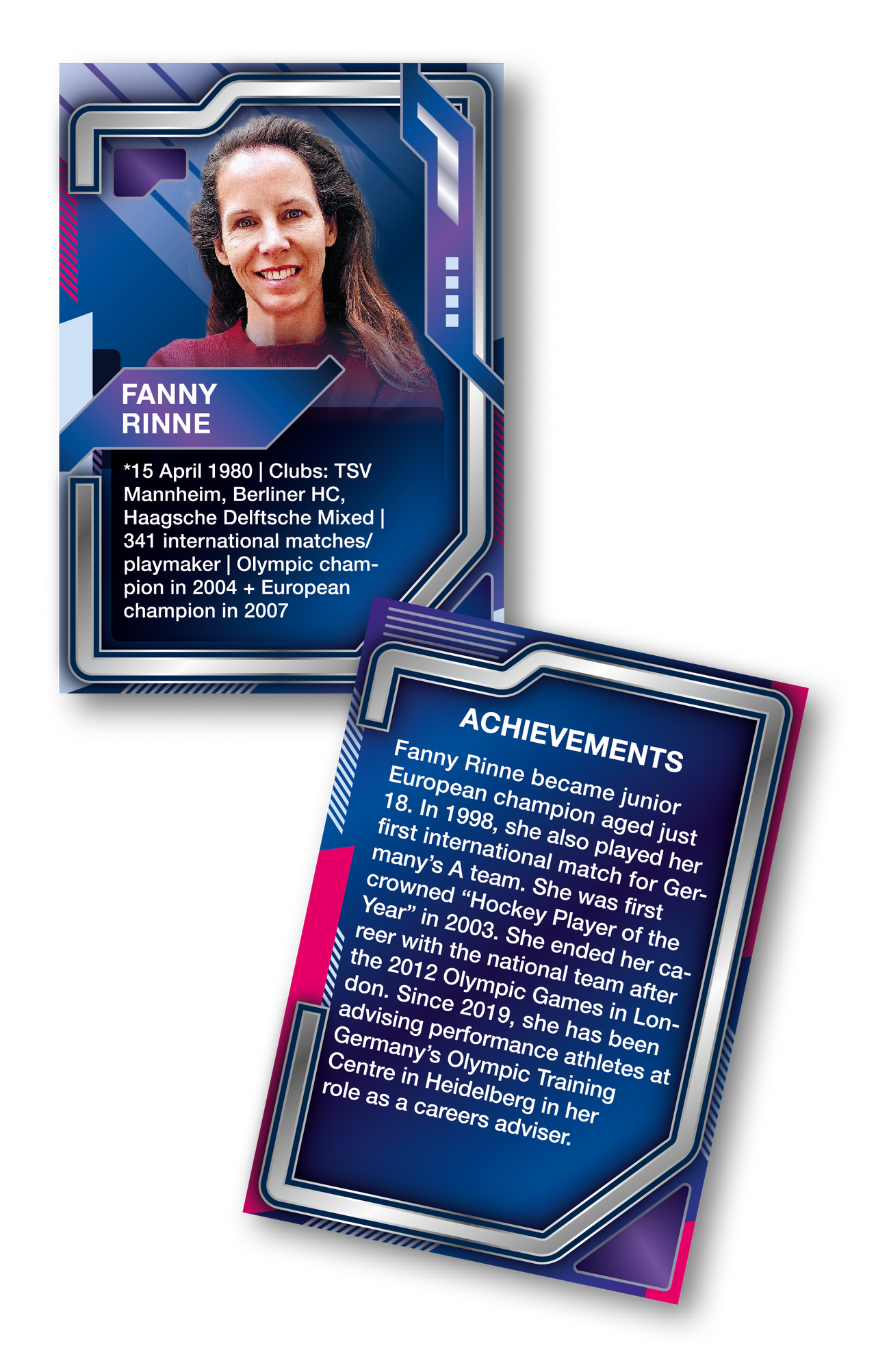
For Fanny Rinne, elite competition and performing at her best were part of her daily routine for many years. The hockey player competed at four Olympic Games, winning gold in Athens in 2004. Today, she offers careers advice to young competitive athletes at Germany’s Olympic Training Centre in Heidelberg. In this interview for Profil, she explains why good teams are more important than outstanding individuals and which principles from competitive sport can also make companies more successful.

Ms Rinne, what do you think are the most important aspects of preparing for a competitive event and what can companies learn from this?
Fanny Rinne: Good training management and long-term planning are vital. But at the same time, you can’t just pursue specific plans dogmatically. If an athlete is injured or doesn’t make as much progress as was hoped for, you need to adapt the plan. I also always found it valuable to measure myself against strong opponents. You test yourself and learn how to handle defeats or setbacks.
A bit like trying things out in a company under competitive conditions?
Exactly. And as a general rule, practise at a high level and watch the best performers to see what they do. Even defeats can be beneficial. It’s not just about the result, but about recognising where you still need to develop and what you may already be doing well. It’s also worth experimenting in a company: maybe someone from the Marketing department also has sales skills. Or someone who has been in a role for a long time might want to take on a different task. These kinds of changes of perspective can be very valuable.
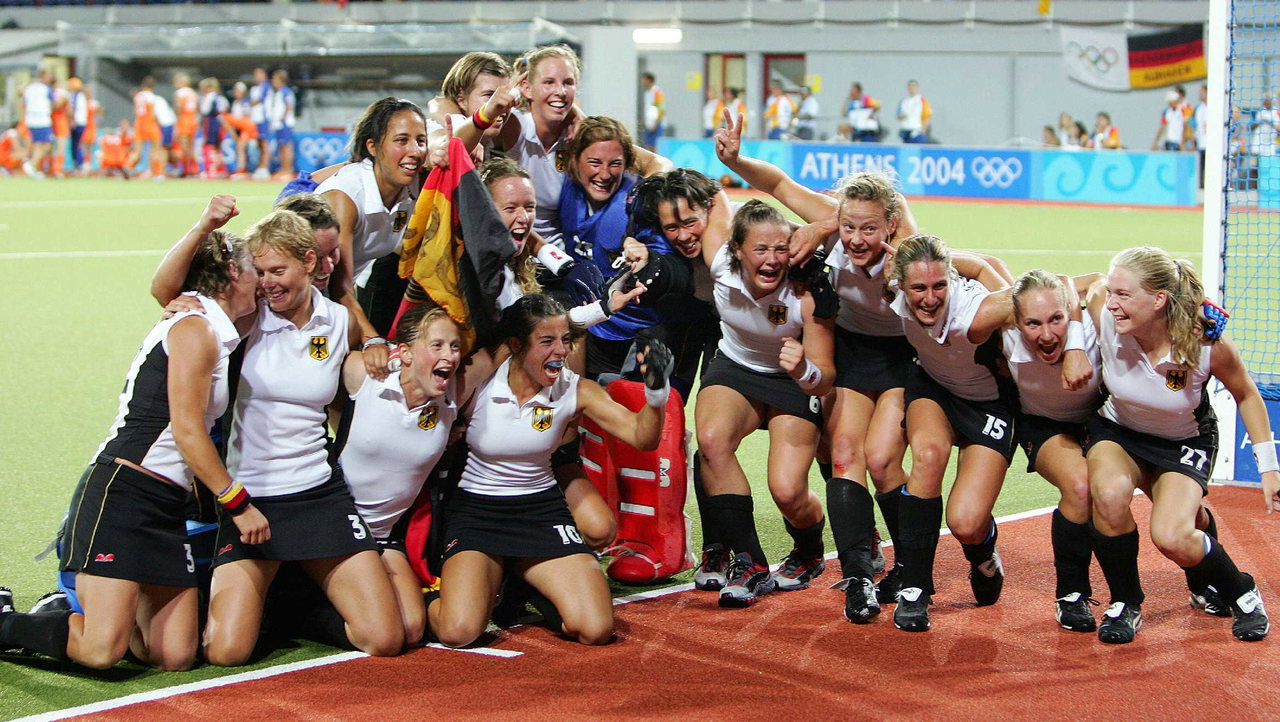
The victory at the 2004 Olympics was unexpected and was only possible thanks to a cohesive team performance
You were at four Olympic Games. What motivated you to keep training at this level for so long?
For me, hockey was just something where I felt completely at one with myself. It always felt just right. Obviously not in every training session, but in general I always knew why I was doing it. I also liked the team camaraderie. Even if I didn’t feel like doing the physical training, I knew that we’d be doing it together, my teammates would be there and we’d have a good time.
What do you think was more crucial: talent, hard work or discipline?
I think it really is a mix. In the first few years, my talent carried me through. Interestingly, I often heard people say that the athletes who are the best performers when they’re young frequently don’t make it all the way to the top. It often tends to be those in second or third place who succeed because they realise they need to work hard to get better. But when I was a child, I never thought I was par-ticularly good. I’ve always considered hockey to be very much a team sport. It was clear to me that I would only perform well if we as a team performed well. And this is why talent on its own is not enough. The crucial elements are hard work, ambition and, above all, the desire to get better.
What distinguishes a good team from an Olympic winning team?
The biggest difference is often not the individual talent, but the team structure. If I think back to the gold medal we won in 2004, I wouldn’t say that individually we had the best players. But we were incredibly well balanced as a team. All the roles fitted together, we communicated well and everyone was thrilled to see their teammates succeed. It was never about who scored the goal, but about winning together as a team.
How does a reliable error culture develop in a team?
It depends very much on the leadership. If someone is publicly “chastised” in a video analysis, this will instantly make everyone else fearful of making errors. If on the other hand errors are viewed as an opportunity to learn, this creates a very different culture. When you concede a goal, it’s almost never down to one single error. It’s usually a series of errors. You get a similar situation in a company. Problems are rarely caused by a single person; often the root cause is a whole process chain. This is why it’s more important to work together to find solutions rather than looking for someone to blame.
A big topic in sport is recovery. Is this underestimated in the world of work?
Yes. In sport, it’s clear that, unless you recover properly, you won’t be able to perform. This is often disregarded in people’s work lives. Everyone knows that you get to a point when the mind is empty. Sleep is the most important form of recovery. This is not just true for athletes. But things like going for a walk or spending time surrounded by nature are also hugely beneficial. You can and must incorporate recovery phases into your calendar just as consciously as work or training.
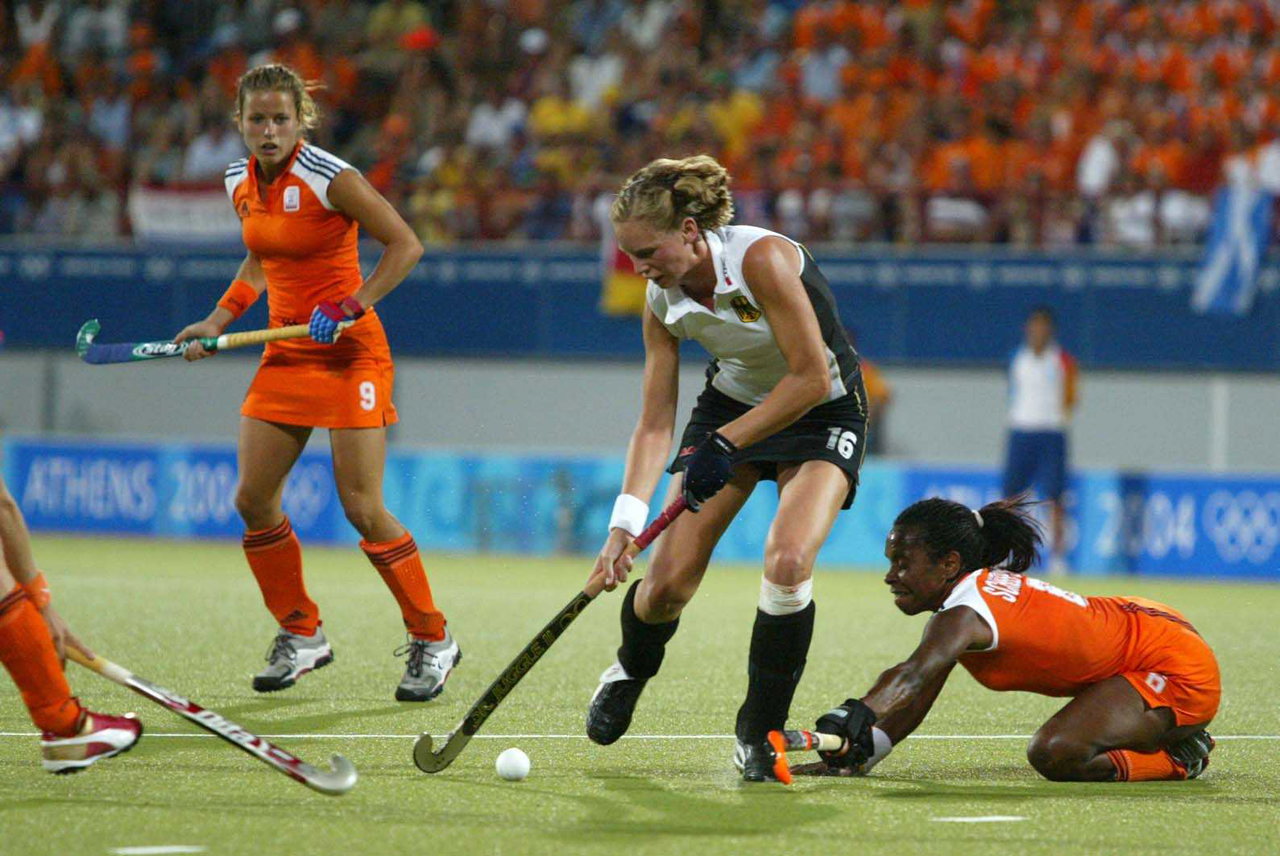
Fanny Rinne captained the German team from 2009–2012
„Es ist immer wichtig gemeinsam Lösungen zu suchen, statt Schuldige zu finden.“
Fanny Rinne
Which qualities from elite sport are also particularly valuable in companies?
For me, one of the most important qualities is the ability to accept criticism and a willingness to learn. When you are a competitive athlete, you get feedback all the time. Coaches tell you directly what was good and what wasn’t. This means you automatically develop a great ability to learn. And this very quality is something that many companies are also looking for: people who want to learn and keep developing. The problem is often that many companies don’t provide feedback very often. Annual employee appraisal interviews tend to focus on structural aspects rather than day-to-day work. But young employees in particular benefit tremendously when they receive feedback or have a mentor.
Is there any advice you would pass on to young talented individuals at an earlier age today?
Focus much more on your own strengths. If you ask young people what they can’t do, lots of things immediately spring to their mind. But if you ask them to name their strengths, suddenly they’ll find this difficult. I think we’ve forgotten how to talk about our strengths. Children do this without even thinking. They say: “I’m good at doing that!” or “I’m great at this!” But at some point we learn that we shouldn’t brag and then we lose this awareness. It’s definitely not a case of being arrogant. It’s simply important to be aware that you can do something well.