POWER OF ITALY
SMES AS A GROWTH DRIVER
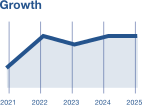
The packaging industry is a major contributor to Italy’s gross domestic product. What’s notable is that almost half of the revenue is generated by small and medium-sized enterprises. Following a minor dip in 2023, the industry is now back on a growth trajectory.

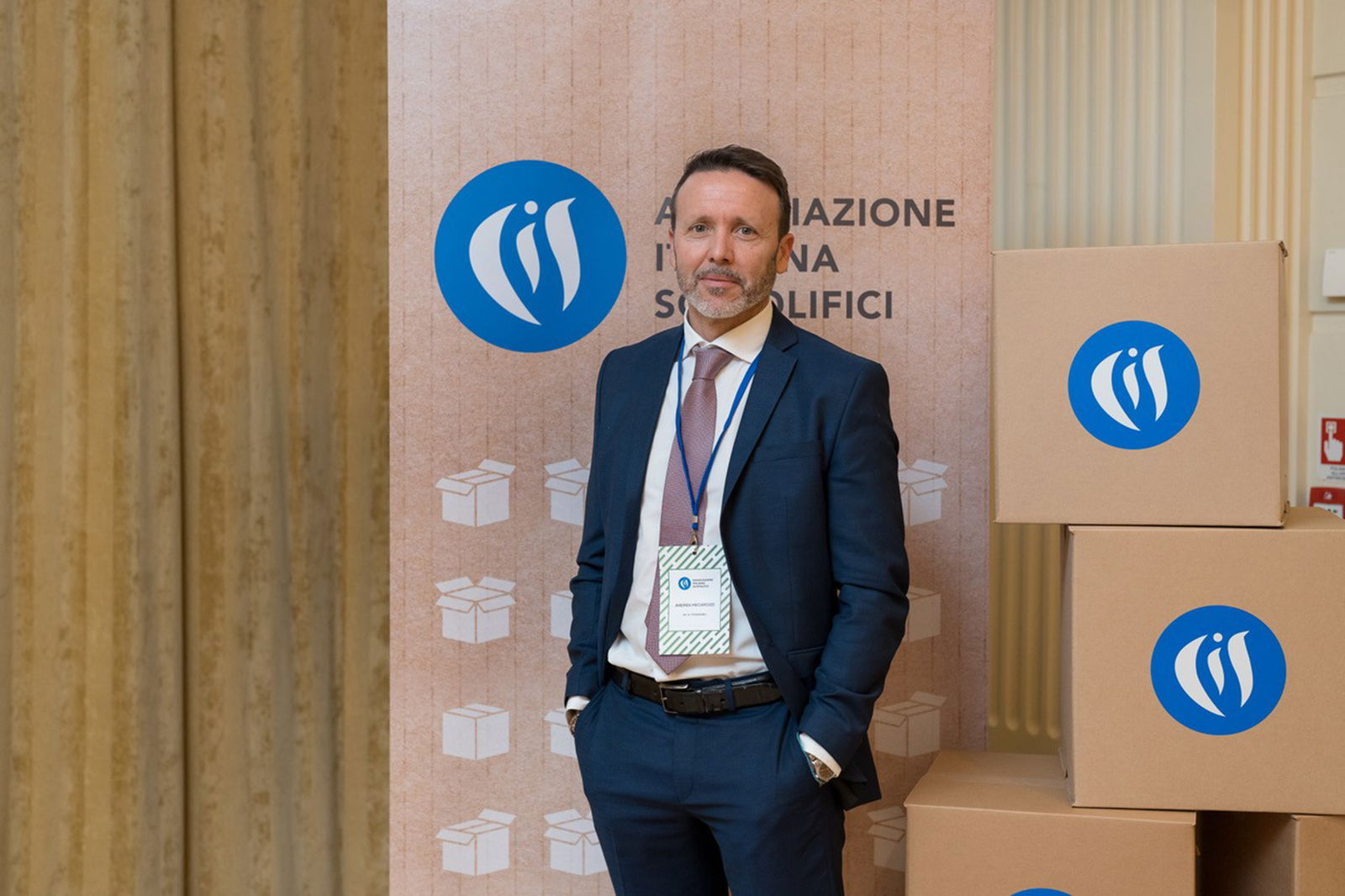
Andrea Mecarozzi, President of the Italian Association of Cardboard Manufacturers, praises the companies’ innovative strength, flexibility and close links to customers.
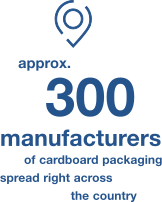
The structure of the Italian cardboard packaging market is unique in Europe. It is dominated by around 300 small and medium-sized manufacturers spread right across the country. “These companies are noted for their innovative strength, flexibility, close links to customers and a strong service mindset. And they are usually family-run,” says Andrea Mecarozzi, President of the Associazione Italiana Scatolifici, the Italian Association of Cardboard Manufacturers. Mecarozzi says that these strengths reflect the typical characteristics of Italian SMEs. They consistently embrace tradition and innovation.”
Second-largest market for cardboard packaging in Europe
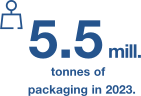
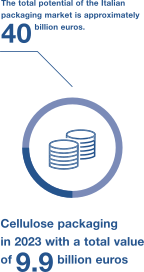
Italy is the second-largest market for cardboard packaging in Europe after Germany. In 2023, around 5.5 million tonnes of cellulose packaging with a total value of 9.9 billion euros were delivered to the market. This equates to about a quarter of the market volume for the entire packaging industry. After strong growth of around 15 per cent in 2022, the cardboard packaging market recorded a slight decline of about 5 per cent in 2023. But the Italian corrugated board market saw a renewed upturn in 2024.
Rising costs and new EU regulation as challenges
Companies are ambivalent about the future. According to a survey by the Associazione Italiana Scatolifici, many expect to see stability or slight growth in 2025. However, the industry is -concerned about the geopolitical situation, rising energy prices and material costs, as well as the challenge of finding qualified personnel. In addition, the introduction of the new EU Regulation on Packaging and Packaging Waste (PPWR) will fundamentally alter the framework conditions. It came into force back in February and is set to be applied generally from August 2026 after a transitional period of 18 months.
Sustainability as a driver of growth
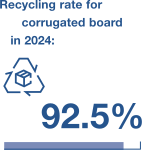
The environmental friendliness of corrugated board is also a key driver of growth in Italy. With a recycling rate of 92.5 per cent in 2024, Italian companies are already significantly exceeding the European targets that need to be achieved by 2030. In addition, in many industries packaging made of corrugated board is already replacing other materials – especially plastics. “According to the latest figures from the Italian Packaging Institute, cellulose packaging accounts for around 32 per cent of the market. This means it makes up the largest share of all packaging materials, followed by glass,” says Mecarozzi in summary.
Another trend is eco-design, which means packaging solutions that save material and at the same time offer maximum levels of protection. This packaging should be customised, lightweight and keep waste to a minimum.
Digitisation, state-of-the-art products and artificial intelligence
Digitisation and Industry 4.0 are also playing an increasingly important role. Automated packaging lines, smart packaging and active packaging, which releases or removes substances to or from the packaged food to extend its shelf life and maintain its quality, are on the rise. “These are important innovations, especially for Italy’s agri-food industry, which exports high-quality products all over the world,” says Mecarozzi.
Cooperation as a strategy for the future
“In addition, our members are increasingly aware that networking and cooperation between our companies is absolutely vital. This is because the development of synergies in the packaging industry will increasingly become a competitive advantage,” says Mecarozzi. In his opinion, cooperation models such as Progroup’s packaging parks, in which corrugated board -production and further processing are closely interlinked, are therefore highly innovative and are becoming increasingly important. “I believe that the new packaging park in Cessalto, with its huge production capacity, will have a positive impact on the whole of northern Italy. We’re excited and look forward to seeing the further developments that this will trigger,” says Andrea Mecarozzi optimistically.